
Last updated November 15, 2026
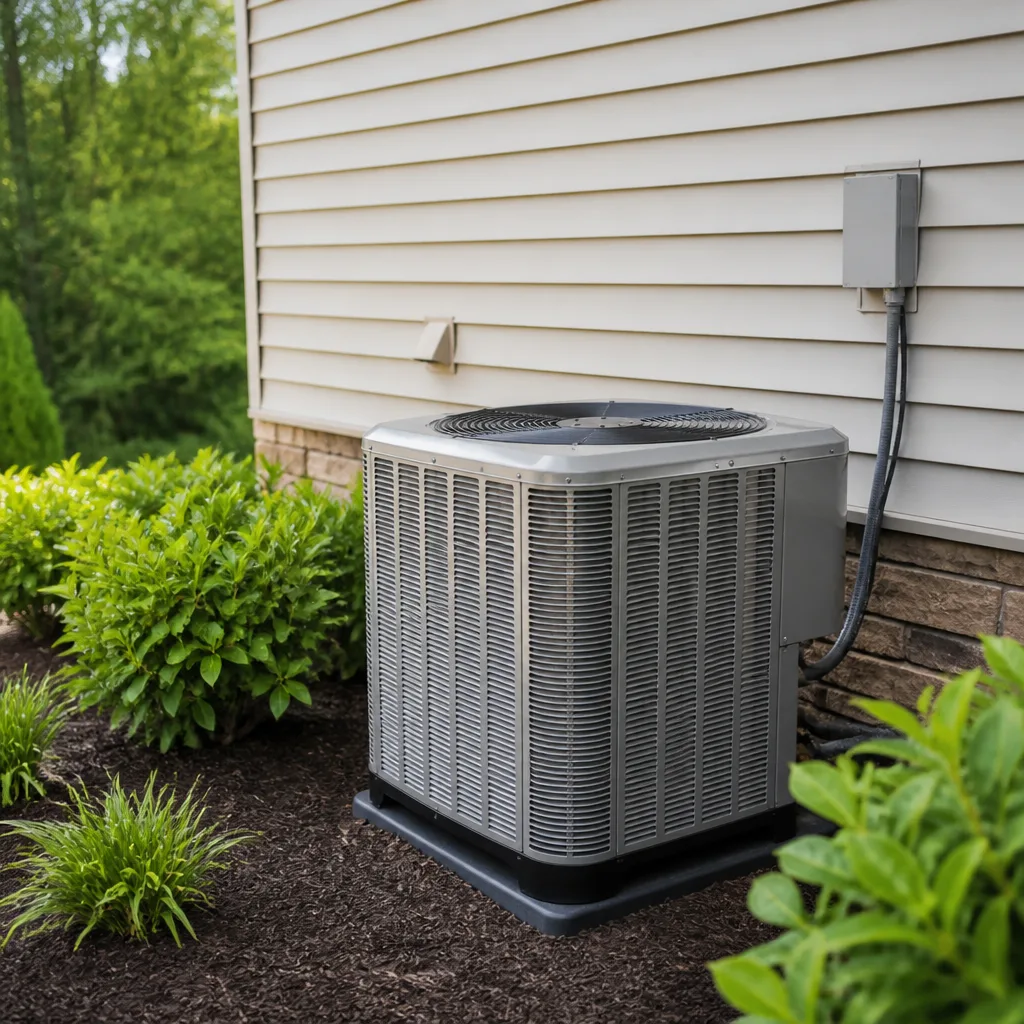 AC repair
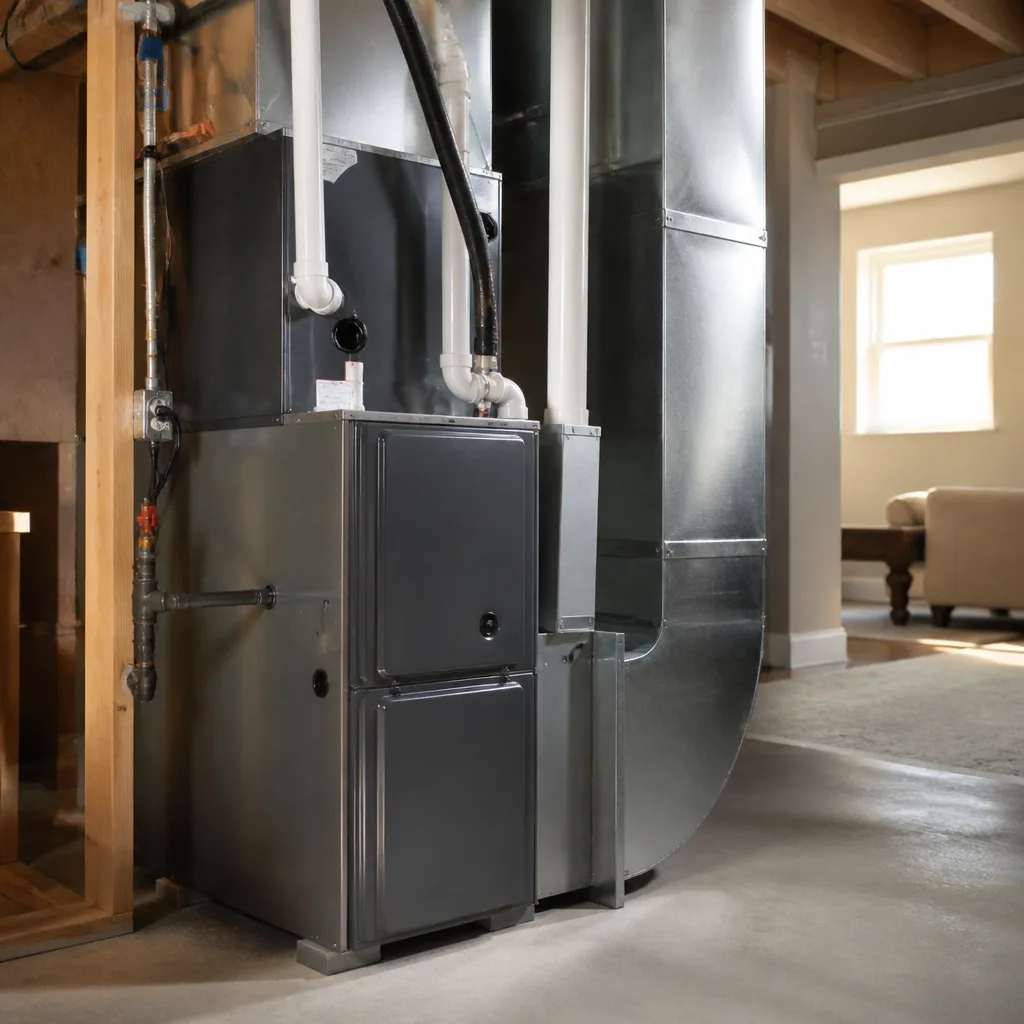 Furnace & heating
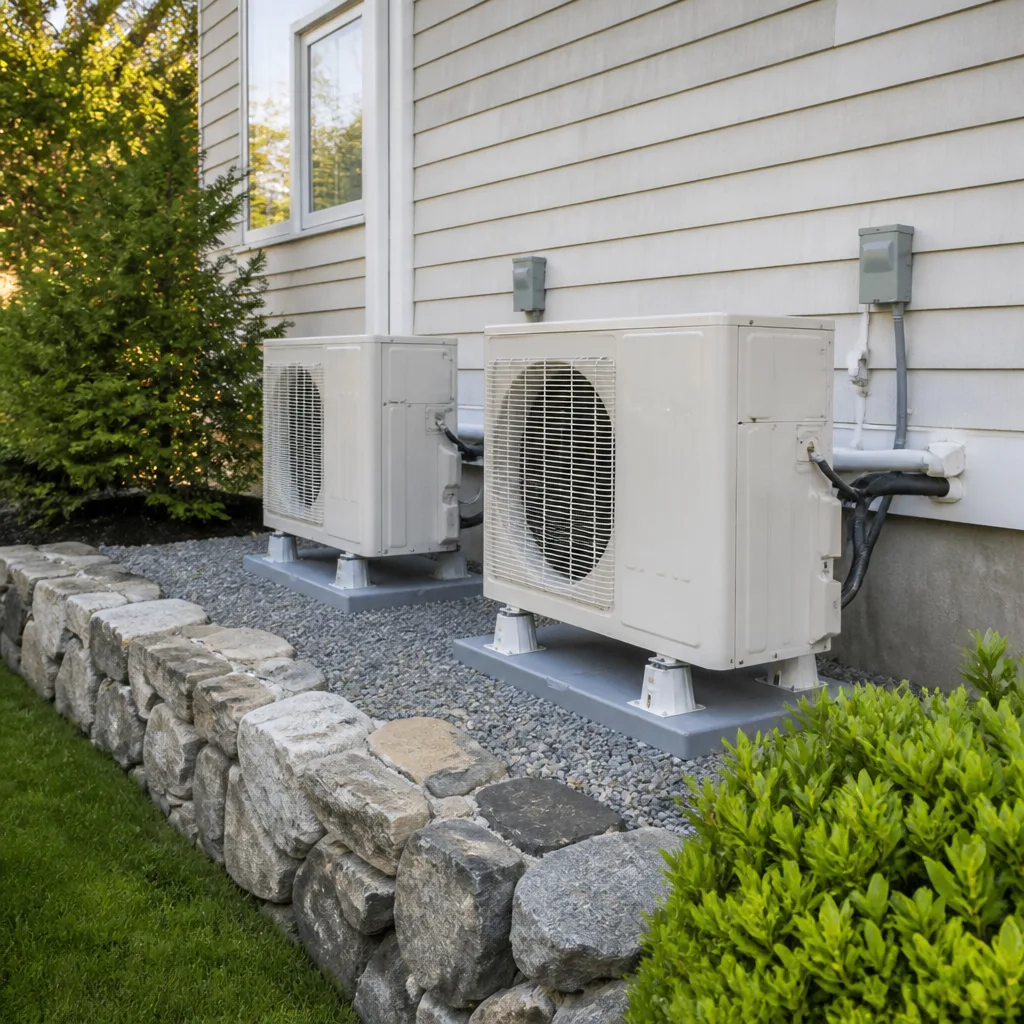 Heat pumps
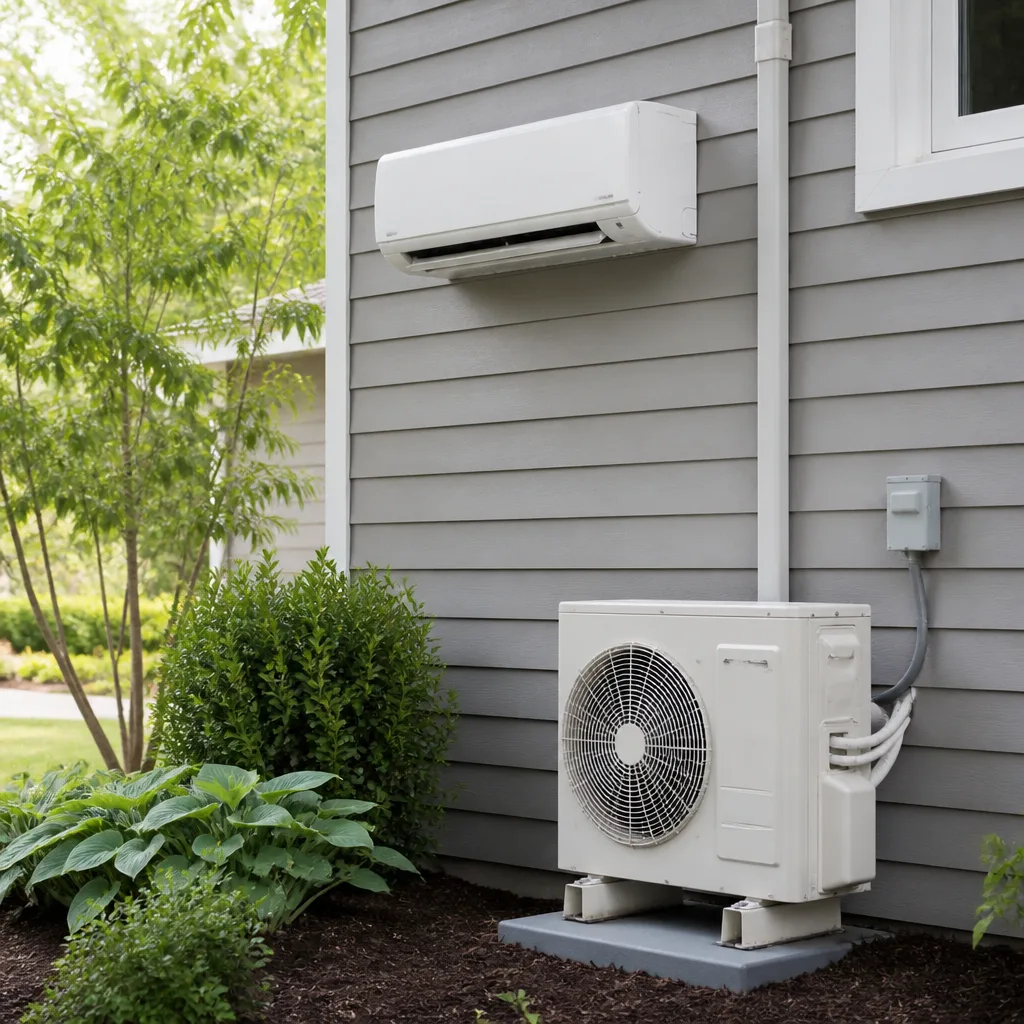 Ductless mini splits
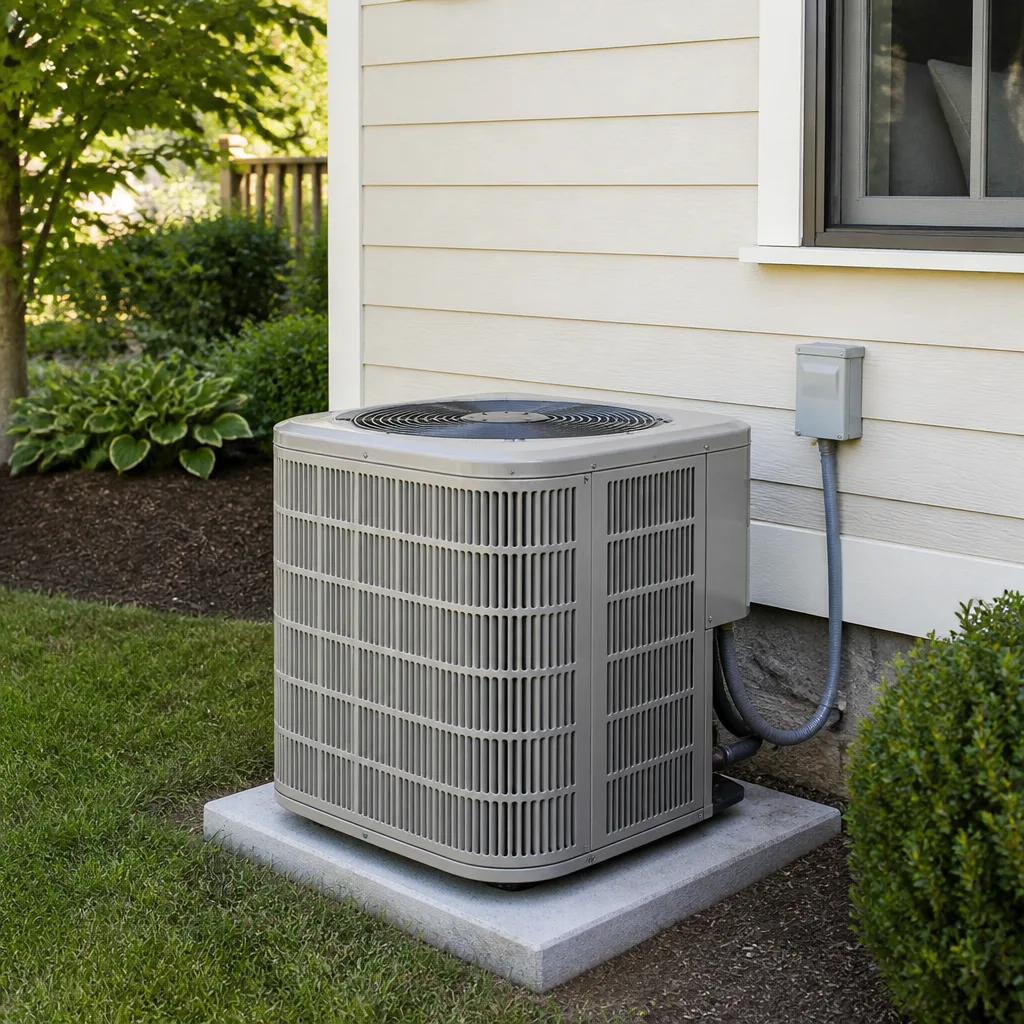 Carrier
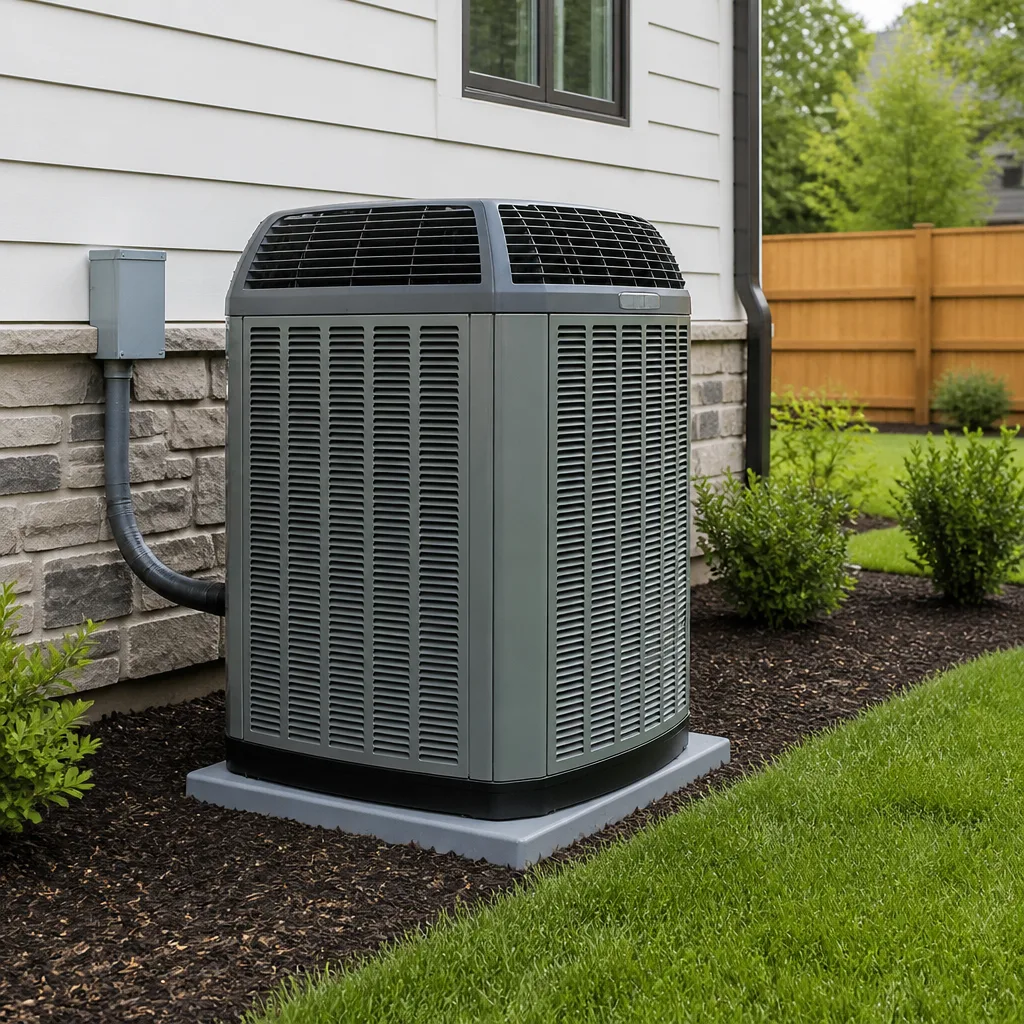 Trane
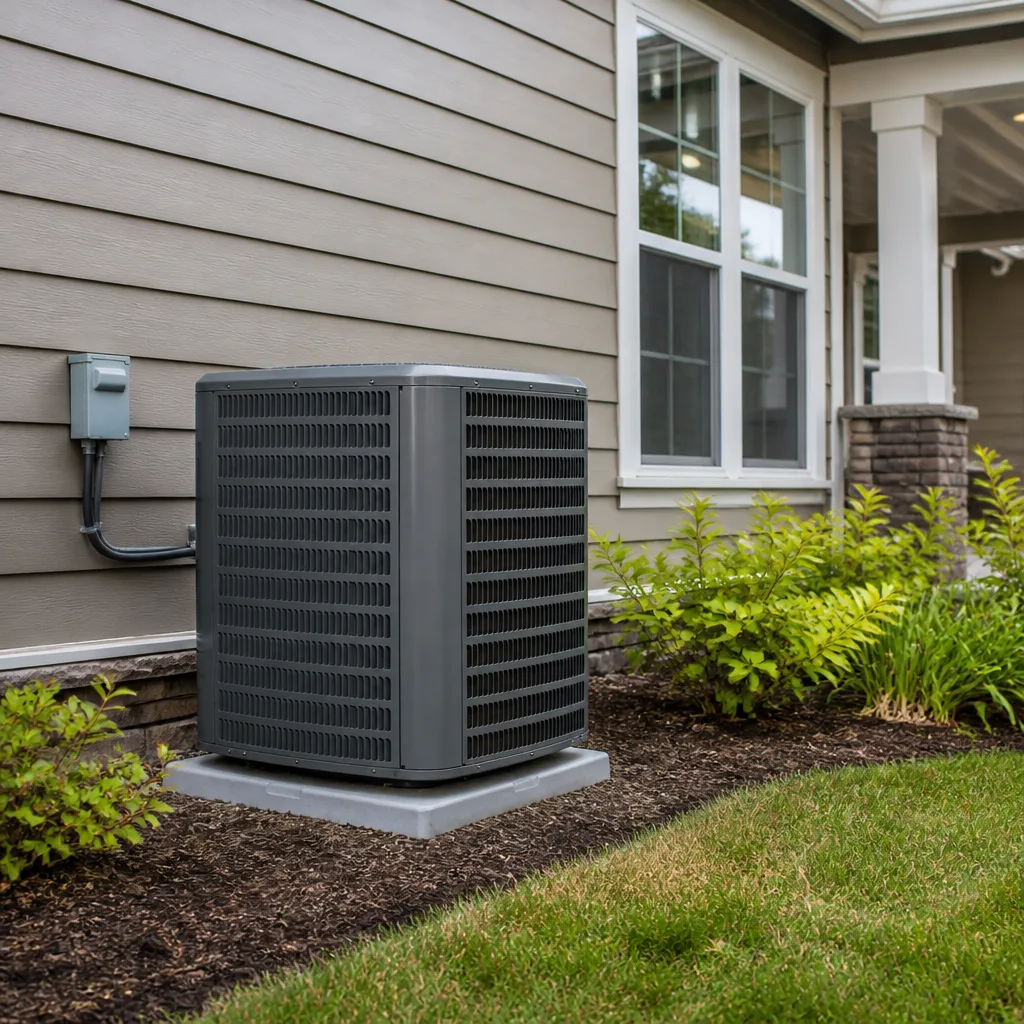 Goodman
Seasonal tune-up and full diagnostic on your Carrier, Trane, or Goodman system - readings shown to you before any repair is proposed
Diagnosis first, numbers second - you approve the repair price before a single part goes in.
Get your free estimateHVAC Warning Signs: An Arlington Homeowner’s Reference Guide
A short-cycling furnace on a cold Arlington morning can mean two very different things. It might be a dirty flame sensor that needs cleaning, or it might be a cracked heat exchanger sending combustion gases into your living space. The symptom looks the same from the hallway. The urgency doesn’t. That gap between “what you notice” and “what’s actually happening” is where most homeowners lose money, either by waiting too long or by paying for the wrong repair. This guide sorts warning signs into three urgency tiers, explains what’s actually behind each one, and covers the failure patterns that show up more often in Arlington homes.
Quick Answer
HVAC warning signs fall into three urgency tiers: shut the system down immediately (gas smell, scorched wiring smell, visible sparks, or a cracked heat exchanger), schedule service within 48 hours (reduced airflow, refrigerant symptoms, water around the unit, repeated short cycling), and book a routine visit when convenient (minor noises, slight temperature drift, filter-level issues). The tier matters more than the symptom, because a $100 minor repair and a safety hazard can announce themselves the same way.
Styles & brands we work with
- AC repair
- Furnace & heating
- Heat pumps
- Ductless mini splits
- Carrier
- Trane
- Goodman
Table of Contents
- The Three-Tier Triage System
- Arlington Failure Patterns Worth Knowing
- Telling Refrigerant, Coil, and Airflow Problems Apart
- What Unusual Smells Actually Mean
- Runtime and Cycling: Sizing Problems vs. Failing Parts
- Sounds That Matter and Sounds That Don’t
- Seasonal Walk-Through: What to Check Before Summer and Winter
- Building a Simple Maintenance Record
The Three-Tier Triage System
Most warning-sign lists treat every symptom as equally alarming. That’s not useful. What you need is a triage framework: a quick way to decide whether to shut the system down, call for service this week, or note it and move on. Here’s how we sort the signs we hear about from Arlington homeowners.
Tier 1: Shut It Down Now
These are safety issues. Turn the system off at the thermostat and, for a furnace, at the gas valve if you can reach it safely. Don’t run the system “just to see.” These are not repairs to wait on:
- Any gas odor in the mechanical closet, attic, or living space. Leave the area and call your gas utility first, then us.
- A scorched or metallic burning smell from the furnace, distinct from dust burning off at the start of the season. That smell suggests wiring or motor insulation overheating.
- Visible sparks, flickering lights tied to the system, or a tripped breaker that resets and trips again.
- A yellow or orange burner flame instead of the steady blue you’d expect. Yellow flame often means incomplete combustion.
- Any suspicion of a cracked heat exchanger, especially with a headache or flu-like feeling that improves when you leave the house.
None of these are DIY territory. A furnace’s heat exchanger and gas train are exactly the components where a small error becomes dangerous. Call a trained technician.
Tier 2: Service Within 48 Hours
None of these are emergencies in the life-safety sense, but they tend to get worse and more expensive the longer they sit, especially during a Texas summer:
- Airflow that’s noticeably weaker at some vents than others, or across the whole house.
- The AC running constantly but the house not dropping below a certain temperature.
- Water around the indoor unit, or a drain pan that’s filling.
- Ice on the refrigerant lines or the outdoor coil.
- A furnace that short-cycles on cold mornings.
- Grinding, screeching, or banging from the outdoor unit on startup.
- A sudden jump in your electric bill with no change in usage habits.
Tier 2 is where the “should I call now or wait” question most often gets answered wrong. A weak capacitor or a partially blocked drain line is cheap to fix on its own. A seized compressor or a soaked ceiling is not.
Tier 3: Schedule When Convenient
- Minor rattles or hums that come and go.
- A slight temperature variation between rooms (a degree or two).
- Dust accumulating faster than usual on return grilles.
- A filter that’s overdue (change it), or a thermostat that needs fresh batteries.
- An older system that’s simply running a little more than it used to.
Tier 3 exists so you don’t panic over nothing. But Tier 3 items that persist for a month or more often belong in Tier 2 by the time you notice them again. Write them down.
Arlington Failure Patterns Worth Knowing
Specific failure patterns show up more often here than in the general statistics, and knowing them helps you interpret what your system is doing. These aren’t unique to Arlington, but they’re the ones we hear about most from local homeowners.
Capacitor Failures From Sustained High-Load Summer Operation
An Arlington summer is long and relentless. The AC outdoor unit runs near its design point for months, and the start and run capacitors are the components that take the thermal beating. When a run capacitor drifts out of spec, the symptoms read as “the AC will not start,” “the fan spins slowly,” or “the compressor tries to start and clicks off.” Sometimes the unit hums and does nothing. Replacing a capacitor is a small, straightforward job. Ignoring a failing one can cook the compressor, which is not a small job. This is one of the most common Tier 2 calls we get in June through September.
Drain Pan Overflows From Humidity
The AC removes moisture from the air, and in Arlington the amount of moisture it pulls out in a summer is significant. That water drains away through a condensate line and, if the line clogs with algae or debris, through the pan and onto your floor or ceiling. Most modern systems have a float switch that shuts the unit down before the pan overflows, but not every system does, and switches fail. If you see water near the indoor unit, turn the system off, clear what you can safely reach, and call. A wet ceiling in a second-floor closet is a much bigger bill than a drain line cleaning.
Heat Exchanger Stress From Repeated Mild-Season Cycling
Arlington winters are mild, which means the furnace tends to cycle on and off through long stretches of moderate weather rather than running steady for weeks. Each of those cycles flexes the heat exchanger, and over many seasons that thermal cycling can lead to cracks. This is one reason we take a heat exchanger inspection seriously on every furnace call, including calls that start as a “the furnace runs a little rough” complaint. A cracked heat exchanger is the single most important Tier 1 item on the whole list.
Duct and Attic Heat Load
Many Arlington homes run some or all of their ductwork through an unconditioned attic. In the heat of summer, the attic temperature climbs high enough to affect delivered air temperature. If a room feels weak while others are fine, the cause is sometimes a duct issue rather than an equipment problem. That’s a diagnostic fact worth knowing before you assume you need a bigger AC.
Telling Refrigerant, Coil, and Airflow Problems Apart
Three different problems that look almost identical at the thermostat are low refrigerant, a dirty evaporator coil, and restricted airflow. Homeowners can’t fix any of them, but the observations you make before the technician arrives help them arrive at the right diagnosis faster, and they help you recognize an upsell when you hear one. Here’s what a homeowner can actually watch for.
Observation 1: What Temperature the Air at the Vents Feels Like
With an ordinary thermometer held a few inches from a supply register, a healthy AC typically delivers air noticeably cooler than room temperature. If the air is only slightly cool, that can point to low refrigerant or a dirty indoor coil. If airflow is also weak, it may be a blower or duct issue instead.
Observation 2: Whether the Outdoor Unit Runs Constantly
A unit that runs almost continuously on a hot day without bringing the house down to setpoint is often low on refrigerant or struggling against a restricted coil. A unit that cycles on and off in short bursts and never seems to finish a cooling cycle could be a failing component or an oversized unit.
Observation 3: Ice on the Lines or the Outdoor Coil
Ice on the refrigerant lines or the outdoor coil is often read as “the system is working too well.” It’s the opposite. Low refrigerant or restricted airflow can cause the indoor coil to drop below freezing and ice over. Turn the system off so the ice can melt, and call. Running an iced-over system is how a small refrigerant leak becomes a compressor replacement.
Observation 4: Filter Condition and Return Airflow
A filter so loaded that you can’t see light through it restricts airflow the way a partial duct blockage would. Before you call anyone, note the filter’s condition and note whether all returns are open and unobstructed. If replacing the filter clears up the symptom within a day, you’ve saved yourself a service call. If it doesn’t, that’s useful information for the tech.
How to Use This
- Note the room temperature and the vent temperature with a thermometer.
- Note whether the outdoor unit is running constantly, short-cycling, or not running at all.
- Look for ice on the lines, coil, or indoor unit.
- Check the filter and all returns.
- Write all four down, along with the approximate time of day and outdoor temperature.
Those four notes tell a trained technician more in the first five minutes than a vague description ever will.
What Unusual Smells Actually Mean
“Burning smell” is the most misused phrase in HVAC complaints. The specific character of the smell tells you a lot about the likely cause and, just as importantly, the urgency tier. Here are the ones worth memorizing.
AC Smells
- Dusty, “first-run” smell at the start of the cooling season. Typically dust burning off the electric heat strips or the indoor coil. Usually harmless and gone within a day or two. If it doesn’t clear, or if it’s mixed with a hot-plastic note, treat it as Tier 2.
- Musty or “dirty sock” odor from the return. Usually a wet or microbially active evaporator coil or drain pan. The coil isn’t clean and moisture is sitting where it shouldn’t. Schedule within 48 hours.
- Hot electronics / burnt plastic odor. This can mean a failing blower motor, a bad capacitor, or a control board issue. Shut the system down and call. Don’t leave it running “to see if it clears.”
- Refrigerant-like smell (faintly sweet or chemical) near the indoor or outdoor unit. Refrigerant doesn’t have a strong odor, but the lubricating oil in the circuit does, and a leak can carry that smell. Treat as Tier 2 and call.
- Exhaust-like or rotten-egg smell from the AC. That’s not the AC. Call immediately, especially if it’s near a furnace or a gas appliance.
Furnace Smells
- Burning dust the first time the furnace runs each fall. Usually harmless. If it lasts more than a couple of days or gets worse, treat as Tier 2.
- Yellow-flame / burnt-gas smell combined with a yellow burner flame. Tier 1. Shut the system off, ventilate, and call your gas utility, then us.
- Metallic burning or electrical scorch from the furnace. Tier 1. Shut it down. This can be failing wiring, a bad control board, or a blower motor on its way out.
- Formaldehyde-like or chemical smell that shows up when the furnace runs and improves when it’s off. Possible cracked heat exchanger. Tier 1. Shut it down and get a technician to inspect the heat exchanger before the system runs again.
- Rotten-egg smell anywhere near a gas appliance. Leave the area and call your gas utility first. Gas safety always supersedes the HVAC call.
Runtime and Cycling: Sizing Problems vs. Failing Parts
How long the system runs and how often it cycles tells you whether you’re looking at a failing component or an installation problem. This distinction matters because one is a repair and the other is a sizing or airflow conversation, and fixing the wrong one gets expensive. Manufacturer engineering standards are clear that proper sizing is a design calculation based on the home, not a guess based on square footage.
Pattern 1: Constant Running on a Hot Day
The unit is running almost nonstop and the house is still a few degrees above setpoint. On a design-day hot afternoon in Arlington, some constant running is normal. Not reaching setpoint by early evening is a different problem. Causes range from low refrigerant to a dirty outdoor coil to undersized ductwork to a system that’s simply undersized for the house. Typically Tier 2.
Pattern 2: Short Cycling (Runs a Few Minutes, Off a Few Minutes)
Short cycling is the pattern most often misread as “the AC is working fine.” It isn’t. A system that starts and stops every few minutes doesn’t run long enough to remove humidity, so the house feels cool but clammy. It puts extra wear on the compressor and starting components. Causes split between a failing component (a capacitor, a refrigerant issue, a control problem) and a sizing issue (an oversized unit that cools too fast). The technician needs to test the component side before anyone suggests a replacement.
Pattern 3: The Furnace Short-Cycling on Cold Mornings
This is the symptom that most often triggers a knee-jerk replacement recommendation. In many cases, the actual cause is a dirty flame sensor, a flue restriction, or a pressure switch problem. All of these are serviceable without a new furnace. If a crack in the heat exchanger turns up, replacement becomes a real conversation, and we walk through the honest math on it. But the diagnostic comes first.
Pattern 4: Long Runs With Weak Output
The AC runs for a long stretch and the delivered air is lukewarm. That pattern almost always points to the refrigerant or coil side, not sizing. Tier 2.
How to Interpret It
- Log how many minutes the system runs and how many minutes it rests over a two-hour window on a representative day.
- Log the setpoint and the actual room temperature at the end of that window.
- Note whether delivered air feels cool or lukewarm at a supply register.
- Compare two days. Inconsistent patterns usually point to a failing component. Consistent patterns on every hot day usually point to sizing or airflow.
Bring those notes to the call. A technician can work much faster with them than without.
Sounds That Matter and Sounds That Don’t
Every HVAC system makes some noise. Some of it is normal, some is a warning. Distinguishing them saves both panic and money.
Normal Sounds
- A quiet hum from the outdoor unit while running.
- A steady rush of air from the vents.
- A soft click when the thermostat calls for heat or cooling.
- A single whoosh at furnace startup.
Tier 1 Sounds
- Loud banging or booming from the furnace at ignition. Sometimes a sign of delayed ignition, which is a combustion safety issue.
- Rattling or popping from the furnace combined with a gas or burnt smell.
- Any sound plus sparks or a scorch smell.
Tier 2 Sounds
- Screeching or grinding from the outdoor unit on startup. Often a failing fan motor bearing or compressor issue.
- Squealing from the indoor blower when it kicks on. Usually a blower bearing or belt.
- Loud clicking from the furnace that repeats without ignition.
- Rattling that’s new and persistent from any part of the system.
Tier 3 Sounds
- A slight hum from a transformer or a vent that whistles faintly.
- An occasional tick from ductwork expanding or contracting with temperature change.
If a new sound appears and stays for more than a day or two, treat it as Tier 2. New and persistent is the pattern that matters.
Seasonal Walk-Through: What to Check Before Summer and Winter
A short, honest seasonal check catches most Tier 2 problems before they become Tier 1. It takes about ten minutes from inside the house and doesn’t touch anything dangerous.
Before Summer
- Replace the air filter. Note the size and stock one on the shelf. A fresh filter goes a long way.
- Test the AC on a warm afternoon. Run it for thirty minutes, then check the vent with a thermometer. Confirm the vent air is meaningfully cooler than the room.
- Clear the outdoor unit’s surroundings. Shrubs and mulch should not block airflow into the coil.
- Check the drain pan and the condensate line. Look for standing water, algae, or debris in the line.
- Note any new sounds or smells in a notepad. One page per season.
Before Winter
- Replace the filter again. Heating season has its own airflow demands.
- Test the furnace on a cool morning. Run it for ten minutes and confirm warm air at the vents.
- Look at the burner flame through the sight glass if the furnace has one. Steady blue is what you want. Yellow or orange gets a call.
- Note any smell that isn’t the first-run dust, and any sound that’s new.
- Confirm the flame sensor and ignitor area is clean (visually only, no tools, no disassembly).
Building a Simple Maintenance Record
The best tool against surprise HVAC failures is a two-page notebook. Nothing fancy. It saves hours of diagnostic time and it gives any technician a running history of your specific system.
- Nameplate information. Manufacturer (Carrier, Trane, Lennox, American Standard, or any other brand), model number, serial number, install date, and the original installer’s name.
- Filter log. Filter size, and date each filter was changed.
- A seasonal note. Vent temperature, vent airflow feel, any noise, any smell, any water where it shouldn’t be.
- A repair log. Date, service performed, part replaced, and technician’s notes on what to watch.
A maintenance record isn’t about being organized for its own sake. It’s what lets us or any Denali AC Repair technician recognize that the “new” noise on today’s call is actually part of a pattern that started three months ago. If you’re in Arlington and your notebook shows the same Tier 3 note moving toward Tier 2, that’s your signal to schedule a furnace repair before the season turns.
Common Mistakes to Avoid
- Running a system that’s iced over. Ice on the coil is often read as “extra cooling.” It’s the opposite. Turn it off, let it melt, and call; running it can take a compressor with it.
- Replacing a furnace on a short-cycling complaint. A dirty flame sensor or a pressure switch is not a reason to replace. Get the diagnostic first, and ask what the actual failed part is before discussing a new system.
- Ignoring a yellow flame. Yellow flame is a combustion problem, not a cosmetic one. It belongs in Tier 1 even if the house feels warm and normal.
- Assuming a bigger AC will fix a hot room. Usually, the fix is airflow, insulation, or a duct correction, not more tonnage. An oversized unit short-cycles, which is exactly what you’re trying to avoid.
- Skipping the filter. A restricted filter masquerades as refrigerant trouble, and it’s the easiest thing in HVAC to prevent.
- Calling an AC company and a furnace company separately. When both sides of the system are in one set of hands, you get a coherent picture of the whole house, not two half-diagnoses that don’t talk to each other.
- Turning to the internet for heat exchanger cracks. A suspected crack is not a diagnosis to research, it’s a call to make. Turn the furnace off and let a trained technician look at it.
See the difference
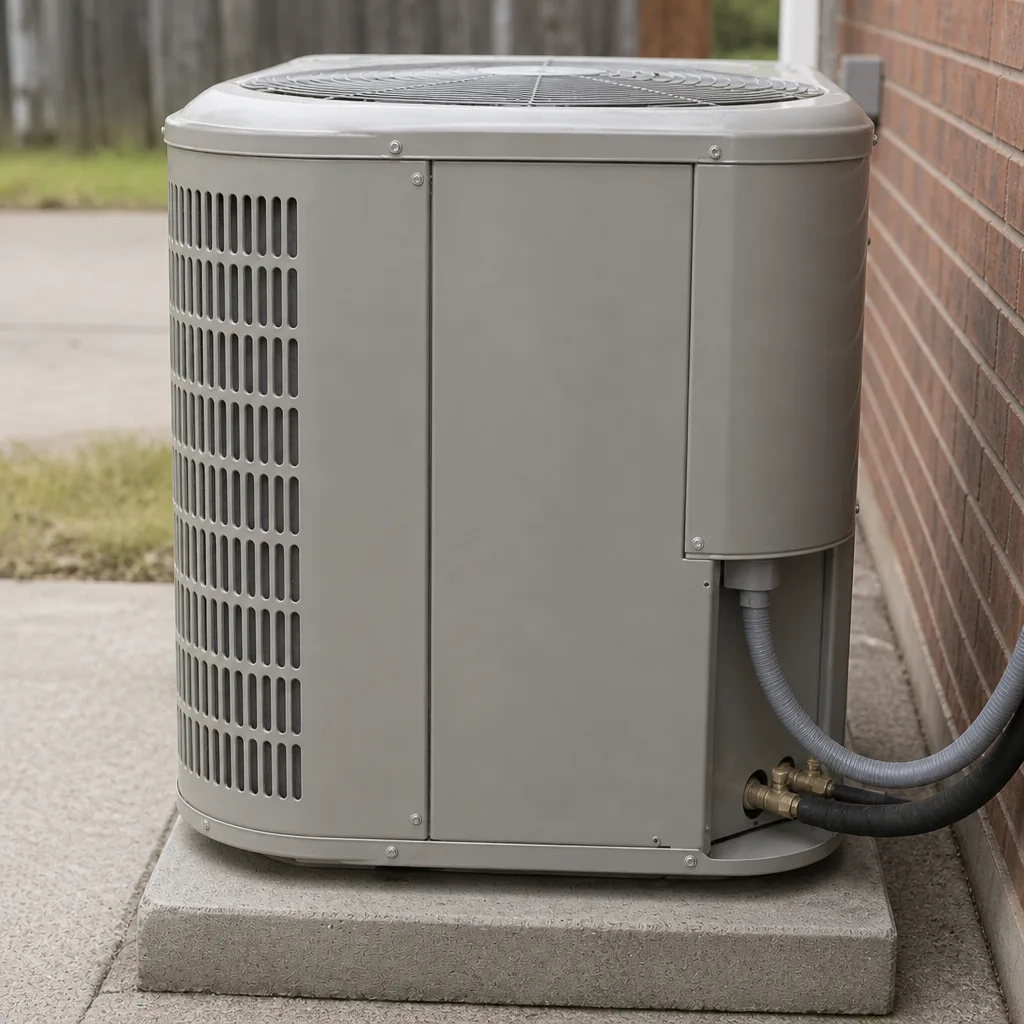
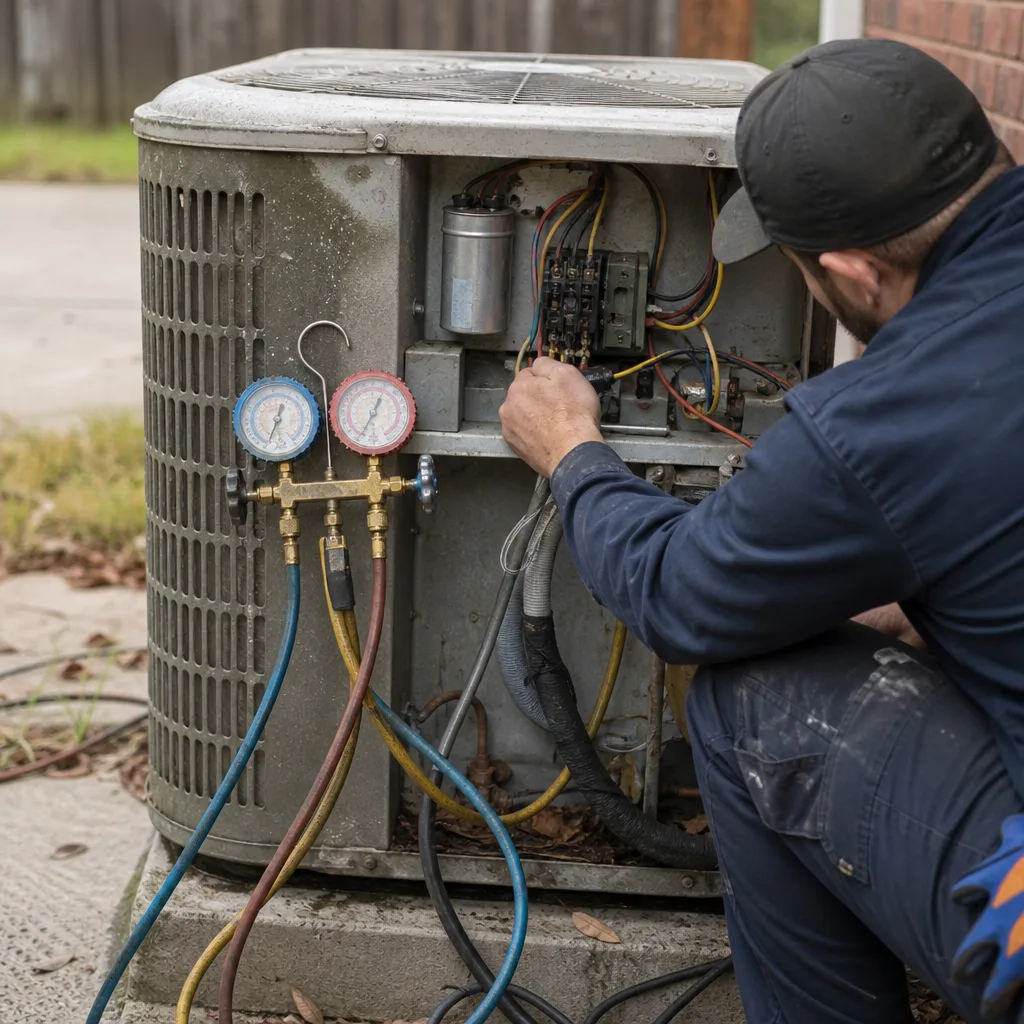 Before
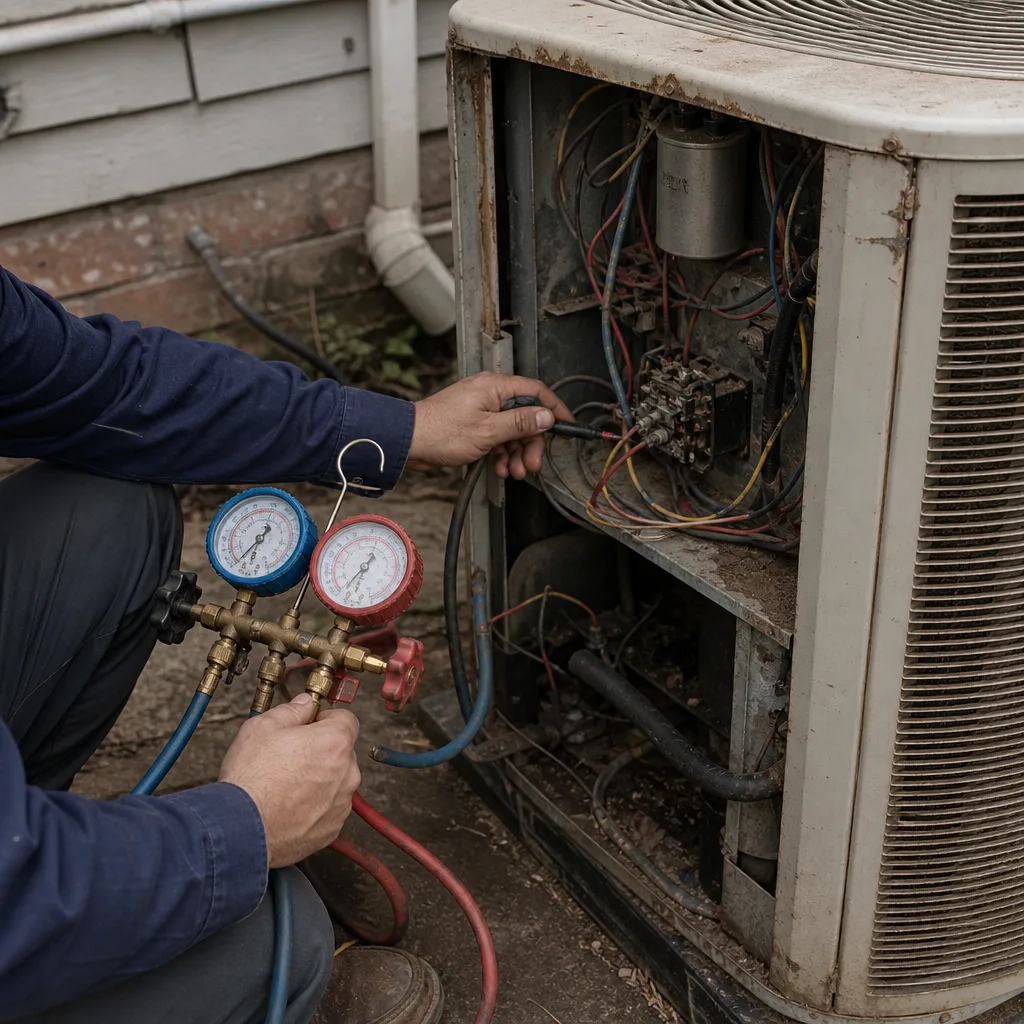
 After
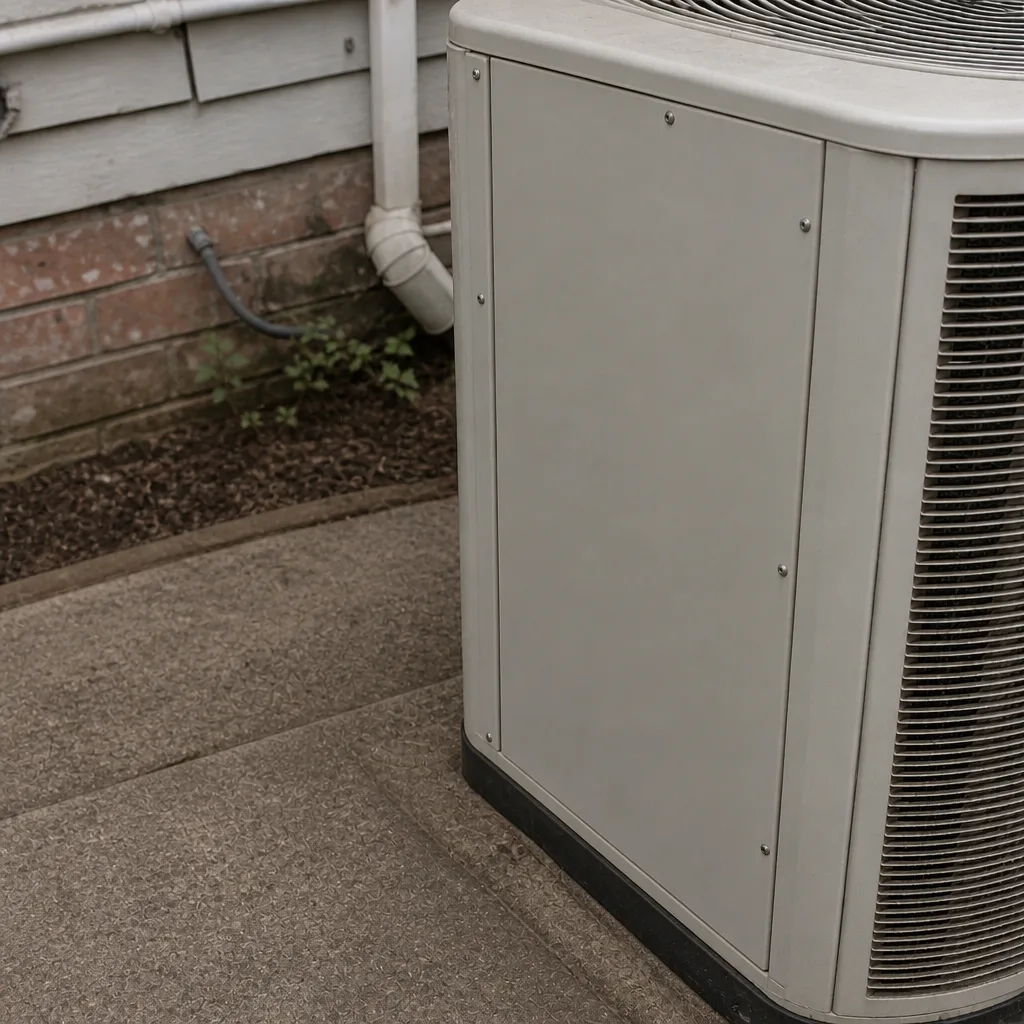
 Before
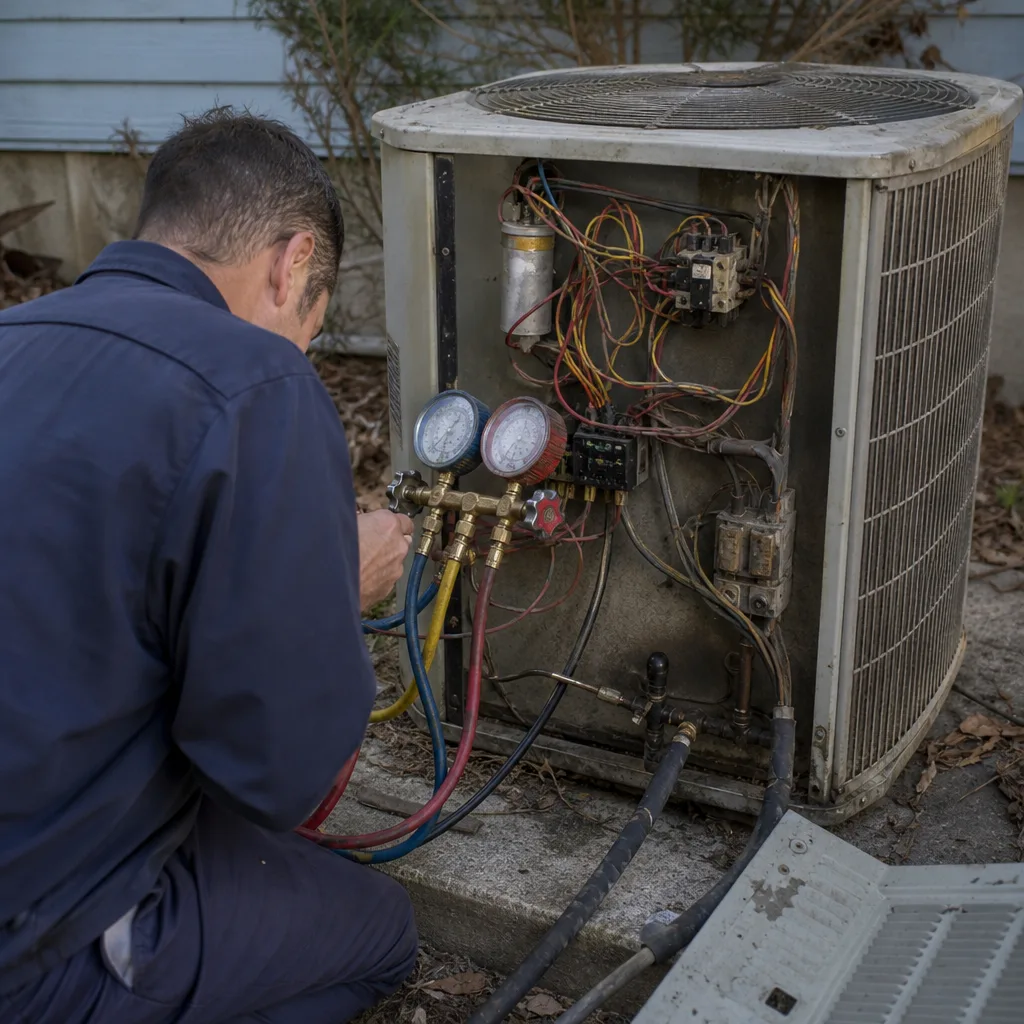
 After
 Before
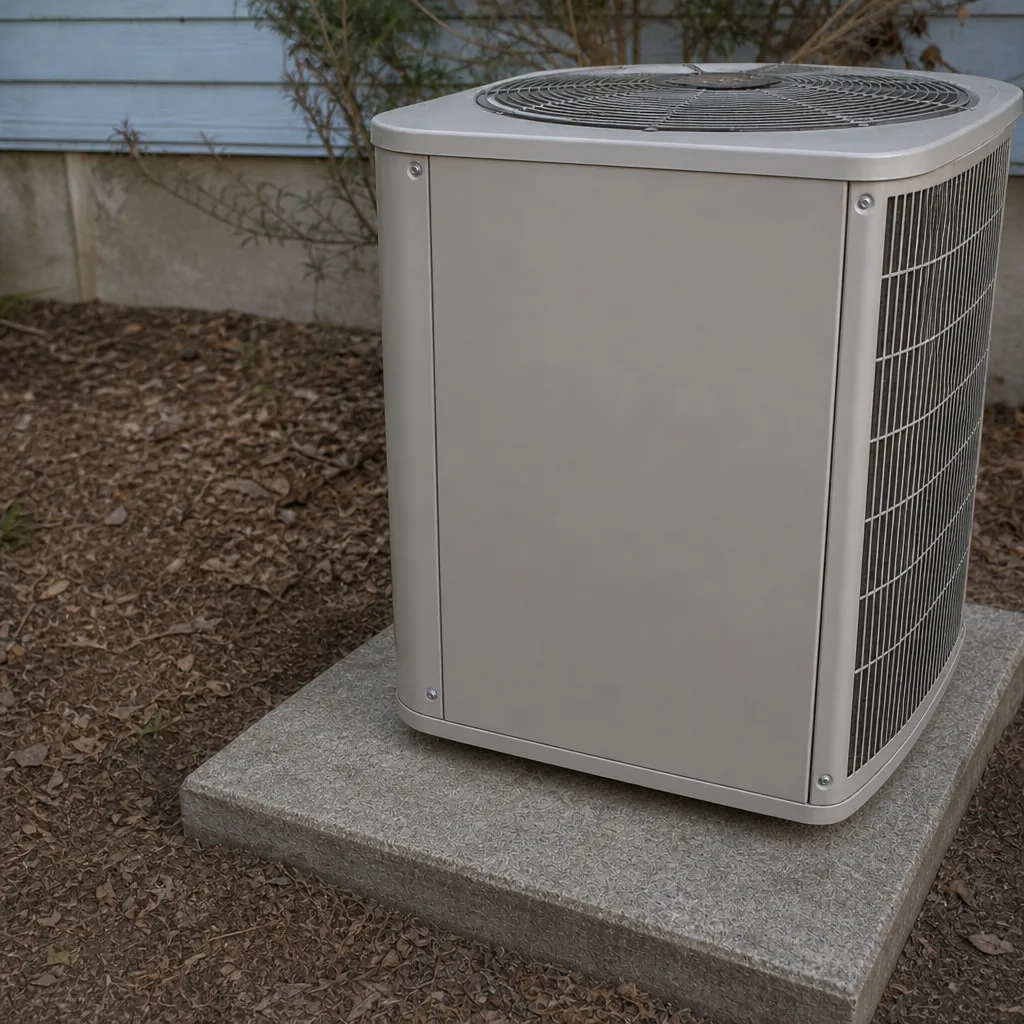 After
When to Call a Professional
Call a professional the moment you hit a Tier 1 sign: a gas odor, a burnt-electrical smell, a yellow burner flame, a suspected heat exchanger crack, or anything with sparks. Don’t diagnose those yourself. For Tier 2, call within 48 hours, especially in an Arlington summer when a struggling system only has so much room before a small fix turns into a compressor replacement. For Tier 3, note it and call when it stops being an occasional thing.
The other time to call is when you’re not sure which tier you’re in. That’s a normal question, and answering it takes a phone call, not a service visit. Denali AC Repair offers free estimates in Arlington. We work on Carrier, Trane, Lennox, American Standard, and the rest of the major brands, and we handle furnace repair, furnace replacement, and new AC installation under one relationship. Call (888) 604-8863 and we’ll help you sort out what you’re looking at.
Frequently Asked Questions
A yellow or orange burner flame on a gas furnace, especially combined with a chemical or exhaust smell, is the most serious single sign because it points to a combustion or heat-exchanger problem. Shut the furnace off at the thermostat and gas valve if safe to reach, and call your gas utility first, then a technician. Don’t run the system again until it’s been inspected. Call (888) 604-8863 for a free estimate on any follow-up work.
Usually not an emergency, but it’s a Tier 2 sign that shouldn’t wait more than 48 hours, particularly in an Arlington summer. The cause is often low refrigerant, a dirty outdoor coil, or an airflow restriction. An appointment this week is much cheaper than waiting until a small refrigerant leak damages the compressor.
No. Short cycling has several possible causes, and only a technician can test which one you’re dealing with. In our experience, short-cycling furnaces often turn out to be a dirty flame sensor or a pressure switch issue rather than anything that needs a new furnace, but that’s a diagnostic answer, not a guess. Call (888) 604-8863 and we’ll walk through what your symptoms suggest before any work is scheduled.
A musty smell from AC vents almost always points to moisture sitting where it shouldn’t be, typically on the evaporator coil or in the drain pan. It’s a Tier 2 sign, not a Tier 1 one. Schedule within 48 hours and have the technician confirm the coil and drain line are both clean and clear. Left alone, moisture on the coil tends to get worse, not better.
Multiple warning signs on their own don’t automatically mean replace. The right answer starts with a real diagnostic. A failed capacitor plus a weak blower motor is a repair list, not a replacement trigger. The one warning sign that genuinely shifts the conversation toward replacement is a cracked heat exchanger on an older furnace. Ask any contractor to name the specific failed part before discussing a new system. Call (888) 604-8863 for an honest read on repair versus replace in Arlington.
Consistent patterns point to sizing; inconsistent ones point to a failing component. If the system underperforms on every hot day at the same time of day, that’s sizing or airflow. If it fails only sometimes, or if the failure pattern keeps changing, it’s usually a part. A two-hour runtime log across two days is the single most useful thing to bring to a service call. Call (888) 604-8863 and we’ll review what you’ve logged before scheduling a visit.
The Bottom Line
Most HVAC warning sign lists stop at “call a professional if you notice something.” That’s not specific enough to be useful. The useful question is always urgency: is this a shut-it-down-now sign, a this-week sign, or a note-it-and-move-on sign? A dirty flame sensor and a cracked heat exchanger can announce themselves the same way. A rusted capacitor and a failing compressor sometimes look the same at the thermostat. The triage framework and the Arlington-specific failure patterns in this guide exist so you can answer that question from your kitchen without a service call. Everything else, from the heat exchanger to the gas train, belongs with a trained technician. We work on every major brand, and we handle repair, replacement, and new installation for Arlington homeowners under one team. One system, one call. Call (888) 604-8863 for a free estimate. We answer 24/7. Fast dispatch from 7am to 7pm, Sunday through Friday. Our technicians have up to 10 years of experience.
Written by the team at Denali AC Repair.